Exploring the Act Sigtuna Conjuring Course 2025

Since 2018, I have been taking time out for one full week every year to grow as a magician, artist and human being. There is no better place to do this than being beside a lake in the beautiful city of Sigtuna, just north of Stockholm, Sweden. Each year, a vast amount of magicians from all over the world, gather to study the art of magic under the helm of Tom Stone (devious magic and misdirection expert) and Leif Olberious (theatrical wizard extraordinaire).

After completing all three Conjuring Courses A, B and C it was evident that some participants still wished to continue this learning process yearly at Sigtuna. From this, Exploring the Act was born. A course to allow participants to bring their own unique acts and ideas, exploring them in detail with the principals and criteria developed in previous years at the Conjuring Courses. It is reccommended that participants have knowledge of conjuring techniques and performing experience but the course was created so that it was not a requirement to have participated in any of the previous course before.

This made it exciting because, it gave the opportunity for both previous students to continue studying and new students to make their way into the fold of conjuring without feeling pressure to go through any previous training other than be a knowledgable creator in the field.

I have been lucky to attend all three years. Each were led by three very different mentors and experts in creating magic – Peter Gröning, Peter Rosengren and Håkan Berg. And each year brought different challenges and learning outcomes.

Here are just some observations I have made across the week that you may find useful if you too are creating magic.

How do we explore an act?

First of all, each participant has a responsibility to bring something to explore. An idea, concept, trick. It does not have to be fully formulated act but a strong starting concept is necessary to get the ball rolling.

It is up to you whether this is a completely new idea, or an old one. I’ve learnt across the years attending that some ideas will be harder to play with than others. But if you fully commit to the challenge, the results will be on an epic scale in terms of creation and development compared to when you are working home alone.


What does it mean to explore one’s act in a group?

The week takes the form of performance and discussion based sessions both in smaller groups and with the entire group.

For ideas, this could mean playing with, changing and or trying new things with them. Ideas that formulate in the group can at times become super inspiring. Concepts you simply could never have thought off on your own. But at times, they can cause conversations to arise that you might be uncomfortable with. Both talking about and hearing. A great part of the process in Exploring the Act is focused on learning how to give and take feedback constructively to others. And accepting it ourselves in a way that does not crush the creative process.

Unlike the Conjuring Courses ,where the exercises are led to a certain degree by the facilitator. The facilitator in Exploring the Act gets us as participants to facilitate and set the schedule. The group together decide what is needed at each point in the day. Essentially we are encouraged to be the adults in the room. I believe the concept is sound. At this stage, it enables us as individuals to develop skills working with one another as a group but also create and develop processes which allow us to create efficiently on our own.


Discussion topics to get things moving

At the beginning of the week we decided the steps required to get things moving on day one. Beginning with;

  • Creating an overview of our ideas : In groups we presented and shared our concepts and ideas (either performed or talked through) to get a better understanding of each participants acts construction. Where each person wishes to begin and end their acts. Individuals expectations, dreams and goals.
  • Exploration and Play : This took the format of an open discussion and sharing of ideas in smaller groups with note taking which led us all to…
  • Reflect on our goals : We agreed that as there was so little time together it became important to be realistic about what we wanted to achieve that week. We were not there to build award winning FISM acts from scratch. But aim for realistic outcomes. Working in groups helped to narrow down what we each wanted to achieve with our ideas and acts across the week and I believe most of us successfully did that.
  • Work : This took the format of solo development and group work. At times across the week, it felt like we all as individuals had the desire to work more on our own. But I suppose the biggest discovery was that the whole point of the courses design is to explore our work together. There is no point in being at the course to go off and do it alone. By the end of the week we all learned to use one another each day as sounding boards, to bounce ideas off and to distract when the creative process became too much for us to handle on our own.

Rules of creation

You are probably wondering as you read this why it is important to have rules when working together?

To begin with there were fifteen people in the Exploring the Act group. That is 15 acts, ideas and concepts in total to get through in just one week. This may not sound like a lot, but upon reflection after completing the week this was a huge project that each of us underestimated. And as the week progressed we explored tools that would help manage our time better.

One of the goals of the course is to give each and every participants material the same amount of time and focus. It became necessary early on to set time limitations in groups to manage time spent equally exploring each persons ideas. We developed strategies to quickly assess what each person needed at the beginning off, and at intervals throughout each day. Getting comfortable with asking questions like “What do you need?” and “How can I help you?” was key. Most importantly, learning that it is ok to ask for help from others when it is needed anytime of the day.

One of the things we had to accept about creation is learning that it is difficult. When we create the rule is we all must get comfortable with being uncomfortable. The creative journey has highs, lows and everything in between. The journey to a great idea is not a straight walking distance from A to B. If you want a great idea, you must visit uncertainty, impossibility and failure to get to it. It’s part of the process. In learning to accept that this is intrinsic in all artistic development, the process becomes more manageable.

This feeling of uncertainty we enter to build something worthwhile, we aptly titled, The Ditch.


The ditch and all its glory!

Part of exploring the act was spent on learning to navigate failure.

The feeling of failure or a setback is like metaphorical ditch in creation. These dips artistically can be pretty hard to get out of!

If you have never experienced this before, a ditch is simply when you don’t know how to proceed with your idea to get to your goal. A writer would call it writers block. An actor a creative dip. Essentially it’s when an idea reaches the point where it feels too difficult to continue pursuing it to completion.

This feeling is very real and powerful. We feel many different emotions in this ditch and when we are deep in it, it is, at that point when we are most likely to give up on our ideas completely.

We as a group discussed coping mechanisms to prevent this feeling of vulnerability in the hope to make future ditches more manageable. These options included.

  • Stretching the timeline : Extending the time that we give ourselves to get an idea to completion.
  • Shrink the scope: Cut features or ideas to make the project more manageable in its present state. We can always expand again with more knowledge and skills at a later stage.
  • Track tiny wins: We must measure daily progress instead of focusing only on the final goal. Learning to be kinder to ourselves!
  • Build a routine: Rely on daily habits rather than waiting for one huge creative inspiration to come. Show up every day! And remember that even the times we do not spend on our acts is fruitful. Taking regular breaks is vital to success.
  • Remember the “Why”: Revisit the original purpose or problem that inspired your idea regularly. Your idea can become something really good but it just takes time. Think not what your idea is now but what it could become in the future!

This next topic we explored was, for me, quite possibly, the most enlightening thing I have learnt to utilise as a creator on the course. And I schouldv’e put it to use many years ago!


The Pain Scale

When the Pain Scale was first introduced, I really did not see the point of it. I found it difficult to gage where exactly I was and why it was relevant in my acts creation. But by the end of the week my mind was completely changed.

The pain scale is a necessary tool used to gage if you are in a good place or bad place on that day of creation. It informs you ff you are ready to create or if you should leave the idea for a while, take a break and have a cup of tea. If we look at the chart above from 1 to 10. 1 being you feel great. Life is easy. 10 being you feel overwhelmed and abject terror at the thought of continuing to work on your idea. You suddenly realise that when you feel around a 5 that means you are in a good creative place. Why is that?

When at 5, we feel just the pressure to create but you are still in a good head space to make progress. And to know before you begin working each day exactly how you feel will mean more meaningful work will be completed. When we are ready to do it. And in the right place.

I realised as the week went on observing people moving up and down the pain scale, it was very clear that when people placed themselves anywhere from 7-10 they really needed help. They were not in a good mood and needed to step away from the task and take a break. When we are at a 10 it is simply impossible to create. Nothing good comes from being there.

At the same time if you are between a 1 and 3 on the scale this is also bad because then you are not putting yourself under enough pressure and obligation to develop or push yourself further. Effectively you are not creating or engaging in a way that will further your ideas in any shape or form.

The pain scale allows us to access how we feel throughout the creative process.

Feelings, I have discovered on this course, play a huge part in creation. They both enable to prevent us from developing our ideas. And it is much better to create and develop our ideas in a good place rather than feeling rubbish and forcing them to come out.


If you wish to keep up to date and perhaps attend the Conjuring Courses or Exploring the Act in 2027 and find out what all the fuss is about visit this website https://magic-workshops.com and go to the contact form. Fill in your details and remember to hit sign up to the newsletter which will keep you up to date about when to sign up. It’s usually around the 1st January at midnight! First come, first served. It fills up quickly!


It’s ALIVE!

Welcome friends old and new to the Arkane Magic Blog!

In November 2019 I decided to write a weekly blog with the goal to improve my writing skills – some would argue that perhaps I still need to work on them! However, after achieving this goal (writing once weekly for a full year) I decided to put the blog to rest until I got some itchy-footy-itus to pick up the laptop and type once more. Today was that day. So this, if you like is a little pre-blog post to let you know from next Monday I will be resuming the blog that you all told me you loved. I’m not sure how long for but as long as I’m feeling creatively challenged I suppose you shall continue to see posts.

If you are sitting comfortably let us begin!

*

‘How on earth do you find the time to be as creative as you are?’

A question I am often asked. My big secret to my daily creativity is being pro-active in tiny little chunks. I am lucky in that magic is my full time job and has been since I was 21. When I decided to become a full time magician I chose to dedicate my life to creating magic. Being an artist IS a full time job!

When I’m not working, I am busy developing all the mental ideas and notions I have at the kitchen table. Solving problems or rather moulding the impossible is difficult. Analytic thinking, I have found, like magic, it is a skill that requires practice.

Solving obstacles now, takes up much less time than it did in the beginning!

Finding a solution that meets my needs is becoming clearer as I am no longer afraid to try everything. And, utilise the simplest method in every circumstance.

A magic book by Nikola Arkane
An apocalyptic comic themed close-up magic booklet with seven brand new original effects.

If you wish to read more about my thinking on why we, as magicians, always try to over-complicate magic methods click here to purchase “In Plain Sight.” The third book in the Arkane written series.

A ticket to ride

Last week I finally, FINALLY! (ÄNTLIGEN for my Swedish friends) got to perform at my first international festival since the COIVD-19 Pandemic began. I’ve been preparing to perform at a live conventions now for so long I almost cried when our flights were confirmed and we actually go on a plane.

The Build up to the Festival…

Tom’s apartment is upside down with me building my Irish Link Act for the Magialdia Festival in Vitoria, Spain. Upon revisiting the act I wanted to make many changes to it. Some of the ideas I would have said a year ago are way beyond my capability. But every day I take one thing and solve the problem and make it work. I am pleased to say I did achieve everything I set out to do. AND, the most complicated things I built from scratch myself worked beautifully!

Story is everything to me

The Irish link tells the story of a girl missing her train. Ending up stuck on the platform where strange and magical things begin to happen around her. The wonder that she finds sitting upon that platform helps her to pass the time. But, also reminds her that some things happen for a reason. Happiness can be found all around us and that’s real magic!

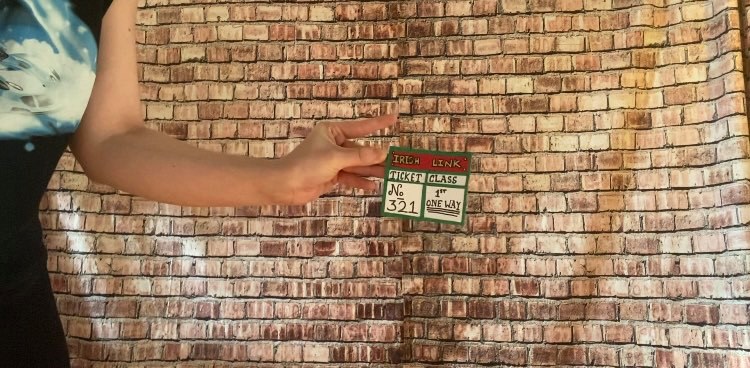
I wanted to add a ticket to the plot. One that had a journey. In the beginning the ticket would fly away as she rushes to make the train. Returning magically at the end in time for her to jump onto the next one.

The difficulty became mostly, ‘how in the hell was I going to pull a train ticket from mid-air at the end of the act?’

First imagine then make

Usually when I don’t have the vaguest idea of a solid method I pantomime. Trying to imagine what would be the simplest way to make what I need with the materials around me. Remember, there are no rules!

I knew that I needed a card to be compressed somehow and spring open at will. Rubber stretches and compresses right?

I grabbed some 260 clear balloons, playing cards, glue and began making my first ever attempt of a flap or spring card.

Be afraid, very afraid!

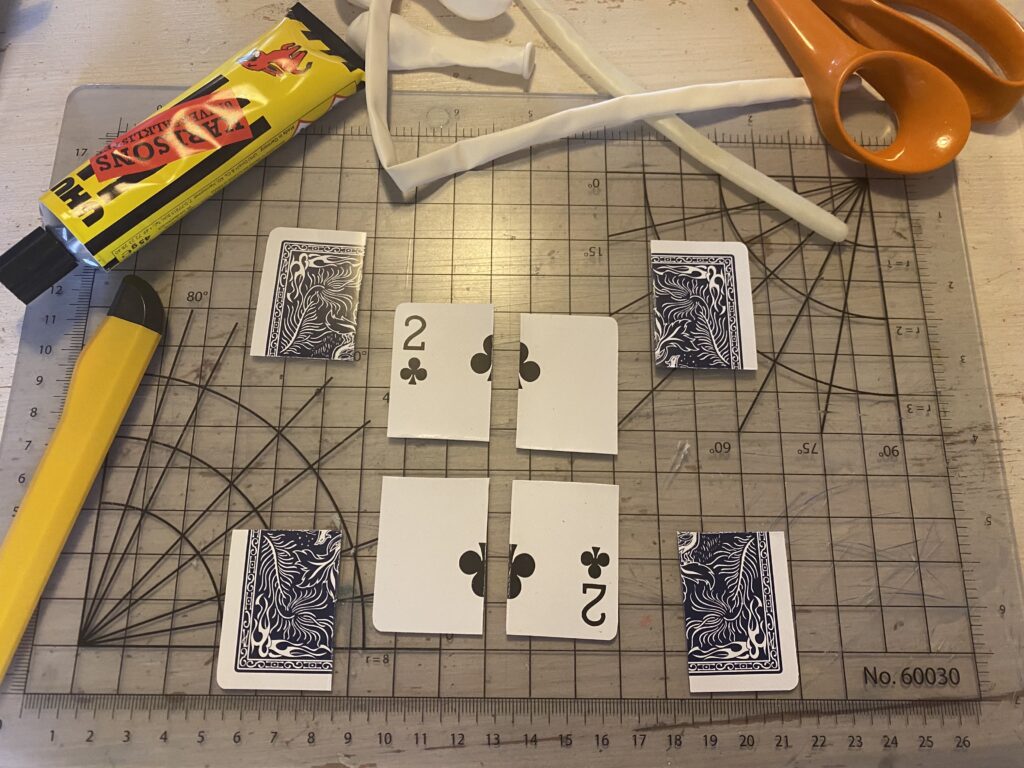
The card needed to be small as possible so I split the card into four pieces (see image above). Initially I imagined that I would have to palm it. Also, I should say I used Phoenix double deckers for thinness. I knew I might need to glue many layers in the trial and error stage.

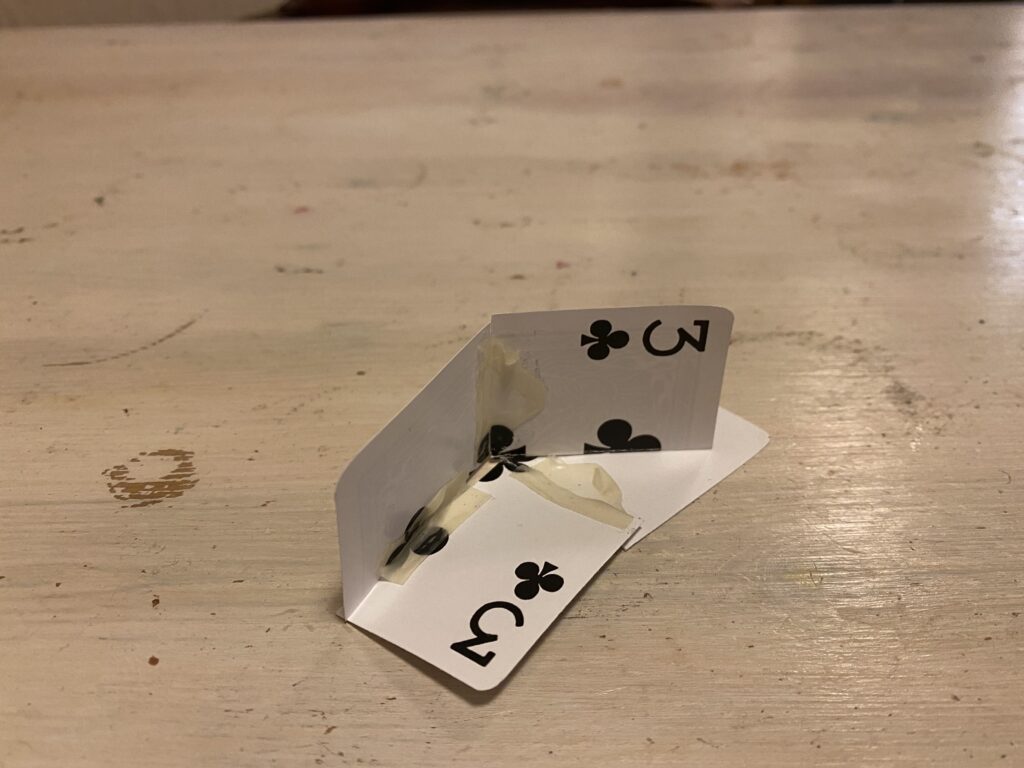
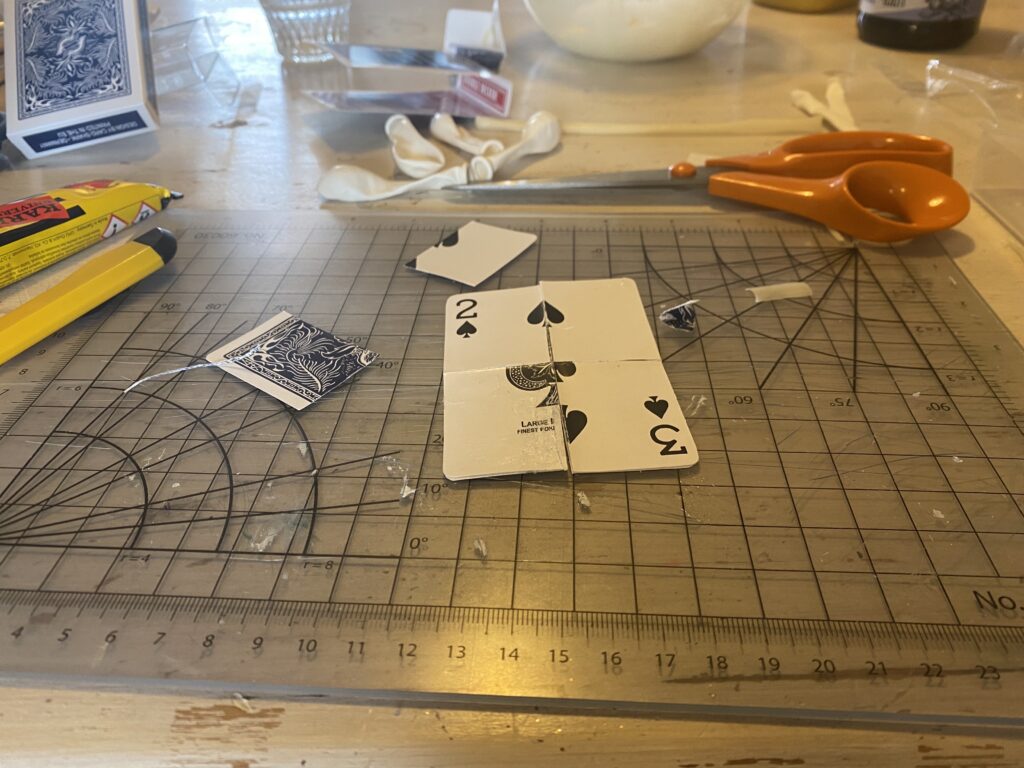
Just so you know the first time you make anything it usually goes to shit – as you can see from these images below.

I cut the balloon up into small flat strips. Laying them across the join between the two corners of card. Supergluing one side then stretching it gently across to the corner I wanted to create the join. I discovered that less is more. With a 260 balloon you do not need to over stretch the rubber between the two corners.

The only thing wrong with my first attempt was that the card refused to return to its natural form. I.e. Flat! I had stretched the rubber too tightly. And, it might work better if it is incased within two cards – a little nudge from Tom.

My Victor Frankenstein Moment!

Being so close to that eureka moment – I could feel it was imminent – after my failed attempt I started over. Sealing the rubbing between two playing cards this time. I took more time and planning carefully making sure I didn’t stick something down before I was actually ready to. Upon completing the second attempt it worked! The card both folded up completely and sprung out flat and could rest in that position. I did it!

I took an idea that was in my mind and made it a reality. ÄNTLIGEN!

The combination of emotional pride in my design and seeing the mutant card I’d built on the table reminded me that great things are sometimes born from disorder.

A terrible beauty is born

Easter 1916 by William Butler Yeats’

I couldn’t help in that moment but think of Mary Shelley’s Doctor Frankenstein shouting, “It’s Alive!” feeling both wonder and sheer terror of the creation standing before him.

Transformation

After running in to show off my creation to Tom I realised it wasn’t perfect and needed work. The card wasn’t reliable and I also could not control it as you can see from the videos below.

So I went back to the table and began making it from scratch. Determined to get it right this time I decided to make it up with card so that it would look like a ticket this time.

After that all I had to do was find out where I would be pulling the ticket from to produce it and once I found that it all fell into place.

*

So when you think you can’t you must keep trying. When one attempt fails you must keep going, because at some stage you will achieve what you set out to do and when you finally (ÄNTLIGEN) do, the feeling is truly the best feeling in the world!

Should we believe all we perceive?

Seeing is believing right? I remember hearing adults saying this from a very young age. However, we never remember the rest of the actual quote because it’s long forgotten..

“Seeing is Believing, but feeling is the truth.”

Thomas Fuller. 17th Centrury English Clergyman.
Assisting Javi Benitez with his ‘El Hilo’ at Mystique Stockholm October 2018.

This is just one of the origins of this phrase. Upon researching the idiom, it actually dates back to Ancient Greece.

The saying means… We cannot believe something unless we see it for real.

When we apply this term to performing magic it can be quite arbitrary because what we believe we see can be tainted by our thoughts and opinions.

What I like to call our inner dialogue.

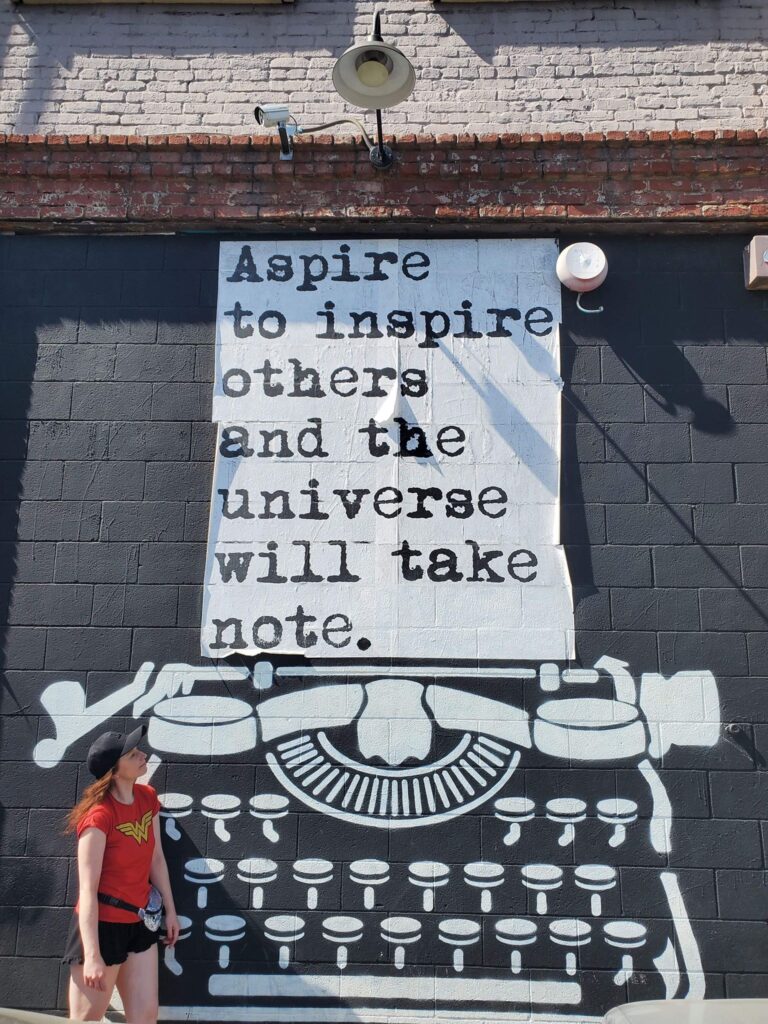
An inspirational girl beside an inspirational wall! 🙂

A fork in the road… Let us deviate from this post.

When I think, I think with a voice. A voice in my head. This may sound strange or you might recognise this feeling?

This week I discovered that not everybody has a voice they can hear inside their heads. Here is an article on this worth reading below.

https://www.iflscience.com/brain/people-are-weirded-out-to-discover-that-some-people-dont-have-an-internal-monologue/?fbclid=IwAR21-s8noIuZQY3DzMngu_3hL8tg1nqM1VkFKEJmmikZgz29E_zcv-g_kBo

When does seeing what you do matter more than thinking?

An example of this is when I am creating or learning something new. A move, routine or effect. Something that feels alien. Like learning to grasp a pack of cards in a different way to execute a sleight. Or forcing myself to look up at a point in my routine when I’m doing two other things with each hand, it just doesn’t feel right. And perhaps it never will.

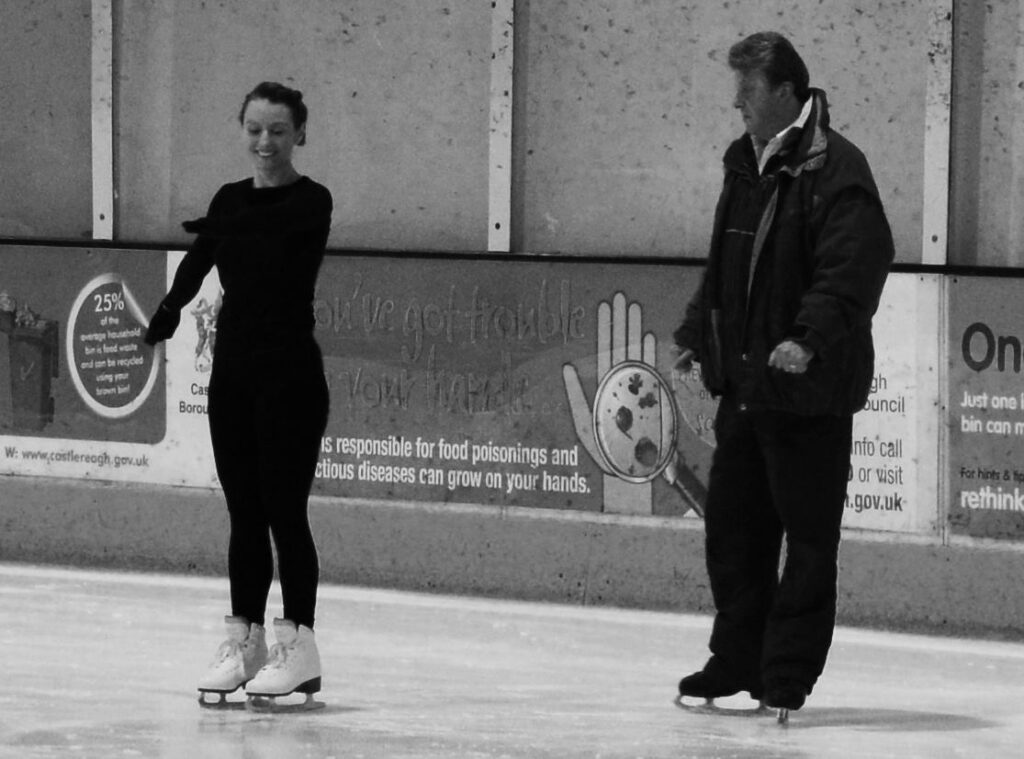
I remember when I used to Ice Skate. A little unknown fact about me was I used to skate three times a week for three whole years as a hobby. However I had to give it up because I got good (Grade 8) and getting good meant jumps, spins, routining and the more dangerous stuff. I was petrified of braking something and not being able to continue magic.

I remember something my teacher told me when I was learning to skate backwards. (I hated it). I didn’t mind so much on corners because your feet and body crossed over giving you stability. Also, everything just felt wrong on my left foot and better on the right.

My instructor Phil told me that all his life, a left mohawk (One foot turn) never ever felt the same as it did skating it on the right, and he’d been skating for years, he was an olympian. So this made me think that sometimes our brain just doesn’t like it when we do something one way compared to another. We have certain preferences that even we aren’t aware of.

*

Magic is all about multitasking with props and your mind. And when something feels awkward it is easy to give up and think that you’ll never be able to do it. It will always feel wrong. But that is only a feeling… what happens when we see what we are doing. When we have a visual alongside the mental image our perception of what we are trying to achieve changes.

Push the record button…

Recently I was learning the turnover pass (as you do) and it felt so strange in my hands. I liked the continuous motion created when performing it but it felt like I was turning over a tonne of bricks.

I knew this sleight might be useful but I never thought I’d actually get used to doing it. More importantly my head told me that it probably looks as bad as it feels.

How wrong was I!

Upon reflecting and recording this move and watching it back after a few hours of practice I couldn’t believe the difference in what my head was telling me, to what I seen on camera i.e: the real thing. It looked brilliant and so different to what I had imagined it to look like. If I just went with my thoughts alone I would have gave up.

*

My advice is that we should all actively record and watch back our practice sessions. It is a way to improve and not give up so easily because our heads told us we weren’t good enough.

What if I don’t like watching myself?

Sadly it is a necessary evil to get over. So get over it! If you want to improve you should use every tool at your disposal and videoing your rehearsals and performances to watch back are a must. Actually, the worst thing to get used to is hearing your own voice. It sounds nothing like what you believe you sound like.

Soon it becomes quite normal seeing yourself and you slowly begin to see past you being on camera and just watch the movements. Which will then guide you to change the choreography, patter, all of which will enhance your performance.

Years ago magicians did not have this tool and still produced amazing magic. Imagine what we could do if we used this tool to help us reach our full potential in magic.

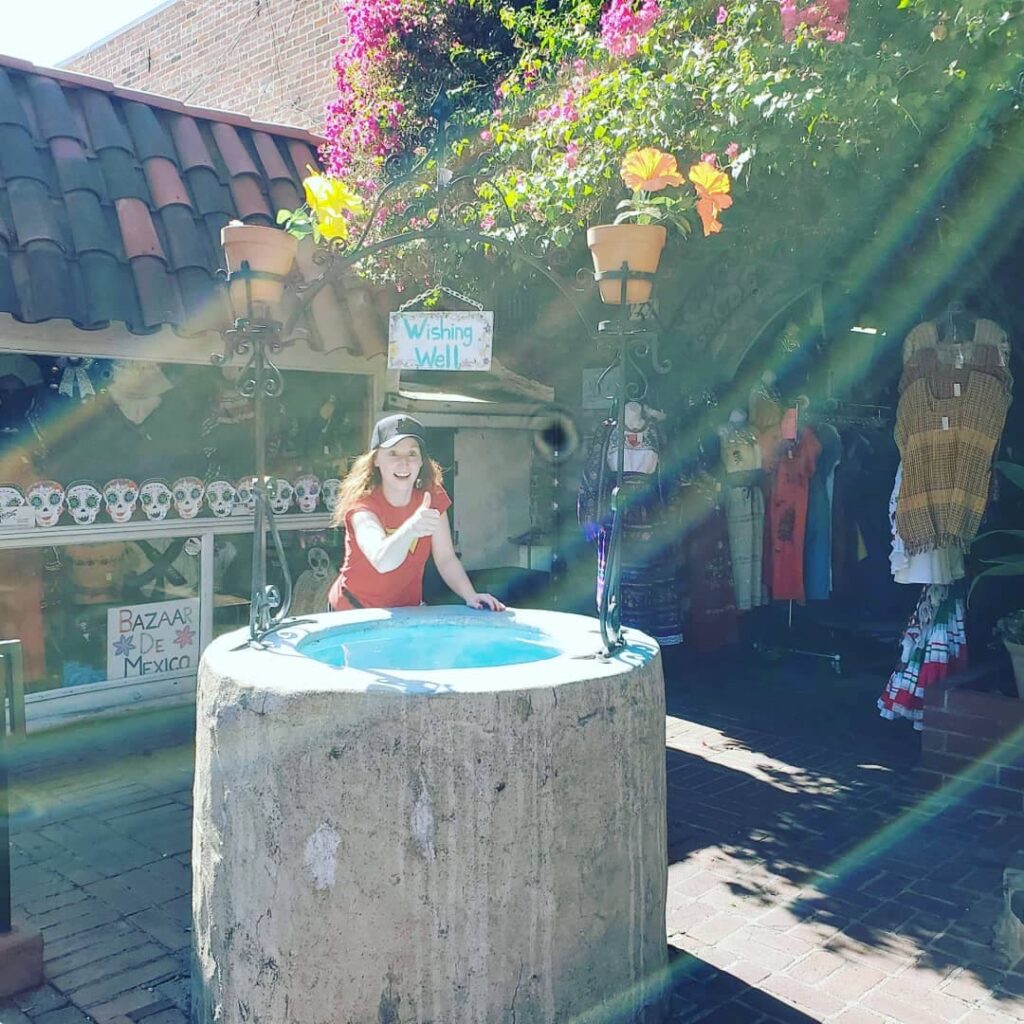
“A dream is a wish your heart makes.” The Wishing fountain on the oldest street in LA September 2019.

I will end this little blog with a variation on the quote from above which I really like from the movie, The Polar Express.

“Seeing is believing, but sometimes the most real things in the world are the things we can’t see.”

The Conductor. The Polar Express. 2004.

It is hard to see and believe the magic we can do just from our feelings alone. Have a little faith, courage and an open mind. Anything is possible.